Why a silk press frizzes or reverts in humidity and sweat
Flat-ironed hair that puffs back up on a humid day or at a sweaty hairline isn't a bad iron or bad luck. It is water undoing what heat set. Here is where it starts, why, and how to fix it without re-pressing your whole head.
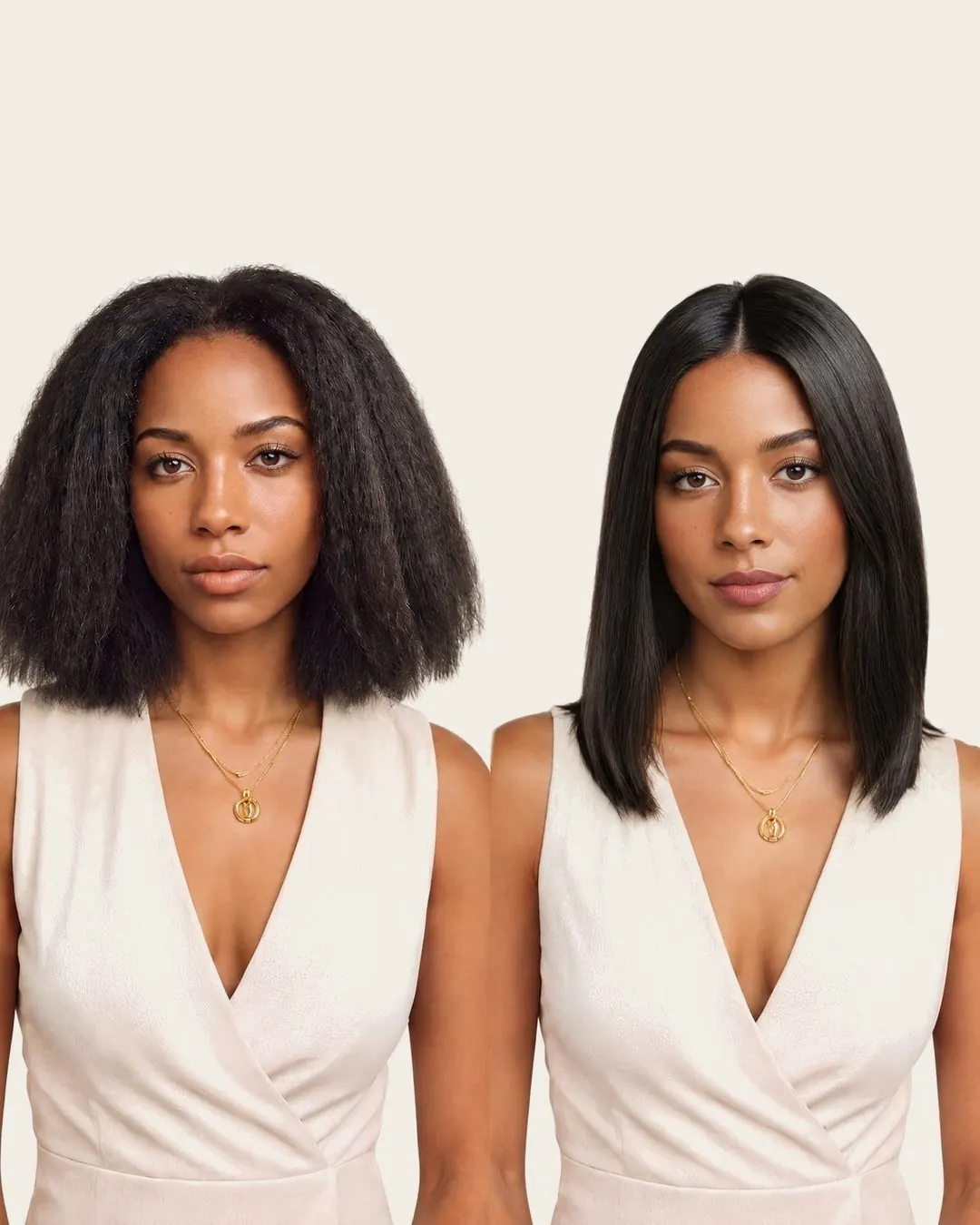
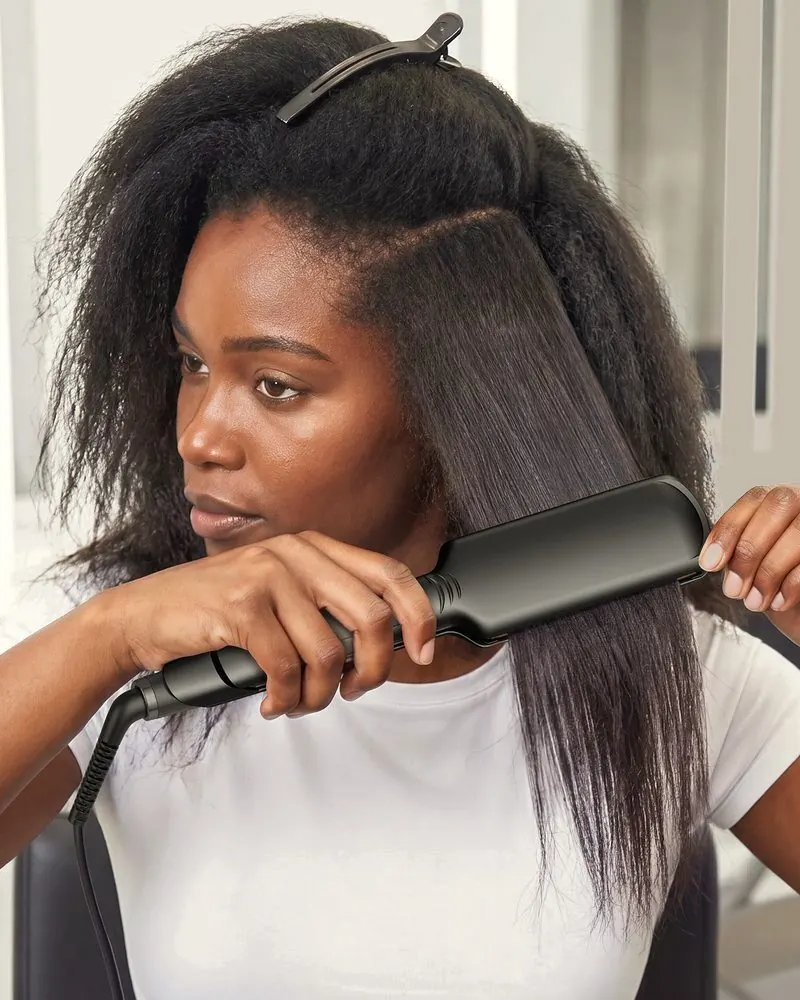
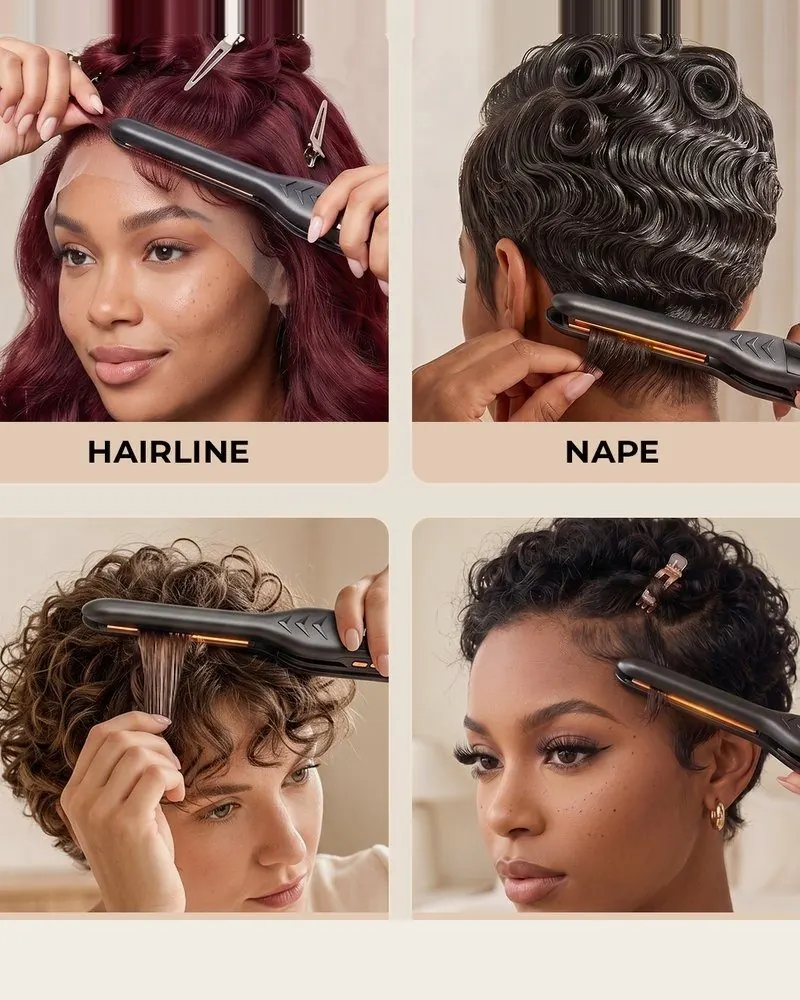
Tap where your hair puffs up first
Why it happens: your scalp sweats first — a workout, a commute, a hot walk. The moisture reaches the first inch of hair at the temples, edges and nape, while the lengths and ends are still straight.
How to fix it: don't run a wide iron down the whole length to fix puffy roots. Let the root zone dry completely first (pressed damp, it sizzles and puffs back up), then use the 0.3" Mini on just that first inch at the hairline, the part and the nape.
Why it happens: humid air carries water into the hair, and water re-breaks the bonds the heat set. Hair that was not completely dry when it was pressed, or whose surface was left rough, reverts fastest.
How to prevent it: blow-dry with tension until the roots and the nape are completely dry, press thin 1.5" × 0.5" sections with a fine-tooth comb just ahead of the plates, and once the hair has cooled, smooth a light serum over the ends.
Why it happens: not every frizz is reversion. Short broken hairs and new growth along the part catch on collars, scarves and pillowcases, and stand up as a halo over hair that is still straight.
How to tame it: more heat won't fix broken ends — don't reach for the + button. Comb the short hairs into the section before it goes through the plates, and once the hair has cooled, smooth a small drop of serum over the surface. Wrap at night on silk or satin to cut the friction.
Why humid air undoes a press
A flat iron does not change hair permanently. The strong bonds that give hair its curl pattern (disulfide bonds) stay as they are; that takes a chemical relaxer, not heat. What heat changes are the weak hydrogen bonds between the keratin chains: heat and tension let them break and re-form in a straight shape, and they set as the hair cools.
Water forms hydrogen bonds with keratin too. When humid air or sweat gets into the hair, water molecules slip in between the chains, take the place of the heat-set bonds, and the hair goes back to its natural pattern. That is the same reason curls come back on wash day — a press is only ever as lasting as the hair is dry.
Why the last bit of drying decides whether the press lasts
Hair that feels dry on the surface can still hold water inside, especially at the crown, the nape and in dense sections. If it feels cool to the touch, it is probably still damp. Press it and two things happen: it doesn't set straight (the water re-breaks the bonds as soon as the plates pass), and the water turns to steam inside the hair, which can blister it and rough up the surface. A rough surface lets the next humid day in even faster.
The instruction manual is clear: the iron is for dry hair only. Steam, a sizzle or a burning smell when the plates close means stop and dry first. More on this in why your flat iron needs several passes.
Why one comb-chased pass beats several loose ones
Strands that enter the plates bunched and crossing over each other get pressed with the bends still in them, and the surface comes out uneven. A fine-tooth comb just ahead of the plates spreads a 1.5" wide × 0.5" thick section into a flat sheet of parallel strands under light tension, so one slow pass leaves it smooth. Each extra pass is more heat on the same hair without making it any straighter. The full technique is in the comb-chase method.
The sweat touch-up rule: roots only
The quickest way to dry, brittle ends is to re-press the whole head every time the edges sweat. The lengths haven't reverted; only the root has. So split the job:
- Wash day: the 2" Titanium Wide presses the lengths — each strand crosses 2" of heated titanium per glide.
- During the week: once sweat has fully dried, the 0.3" Titanium Mini touches up only the first inch at the hairline, the part and the nape, without a wide hot plate near your forehead or ears.
Both have titanium plates, an LCD temperature display with +/− buttons, a 360° swivel cord that turns as you reach the nape and the back of the head, and an ergonomic grip.
The Silk Press Set puts both in one box for $79.98 ($99.98 if bought separately); it ships together Dec 1–3. For short hair and edges on their own, see short hair, edges and beards.
Quick checklist for a press that lasts
- Roots, nape and the inside of every section completely dry before the iron touches them.
- Heat protectant, then the starting point for your hair in the temperature chart — use the + and − buttons; the LCD shows the setting.
- Sections about 1.5" wide × 0.5" thick, comb ahead, one slow pass (sectioning guide).
- Sweaty edges: let them dry, then touch up the root only.
- Wrap at night on silk or satin and keep moisture away (aftercare).
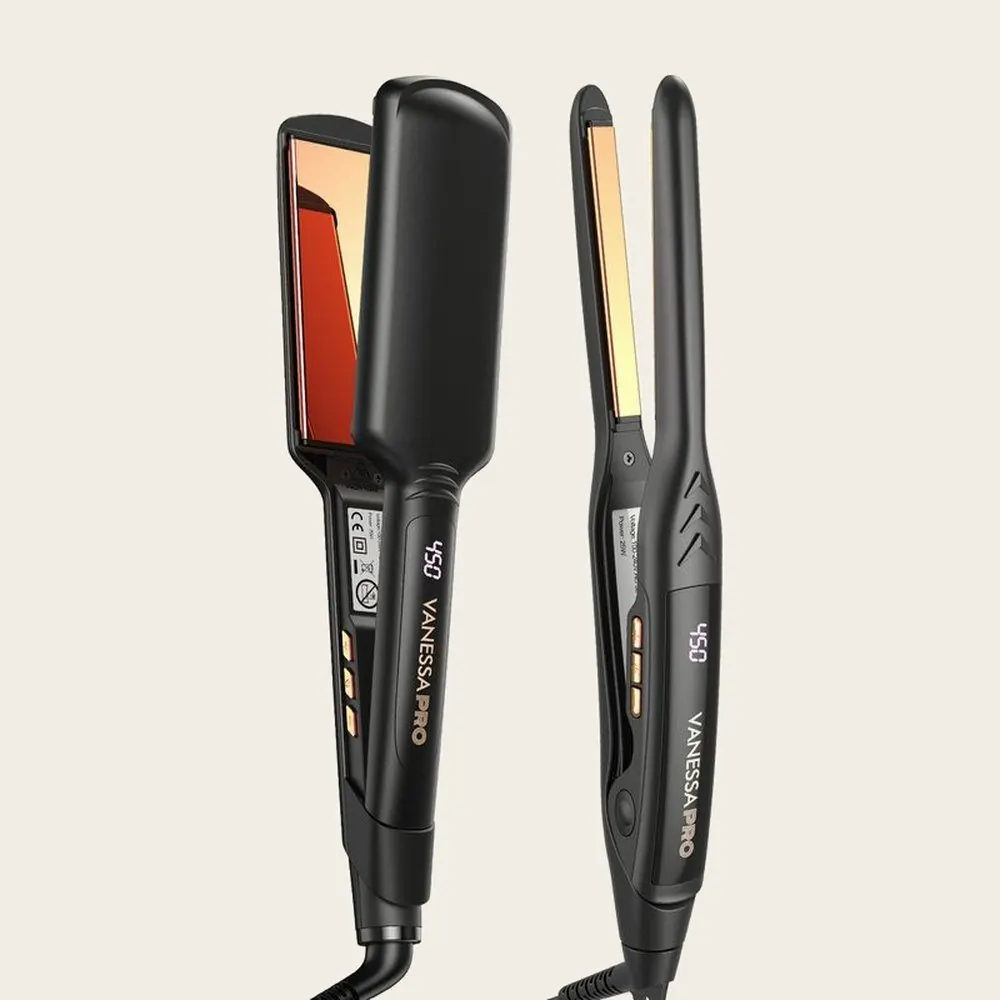
Silk Press Set · 2" + 0.3"
Not sure which width? Take the 30-second quiz →