Steam straighteners, "zero damage" claims and flat-ironing dyed or fine hair
Steam and "zero heat damage" promise a shortcut. The physics says otherwise: what protects dyed, bleached and fine hair is dry hair, the right setting and one pass. Here is why, and how to set your iron for fragile strands.

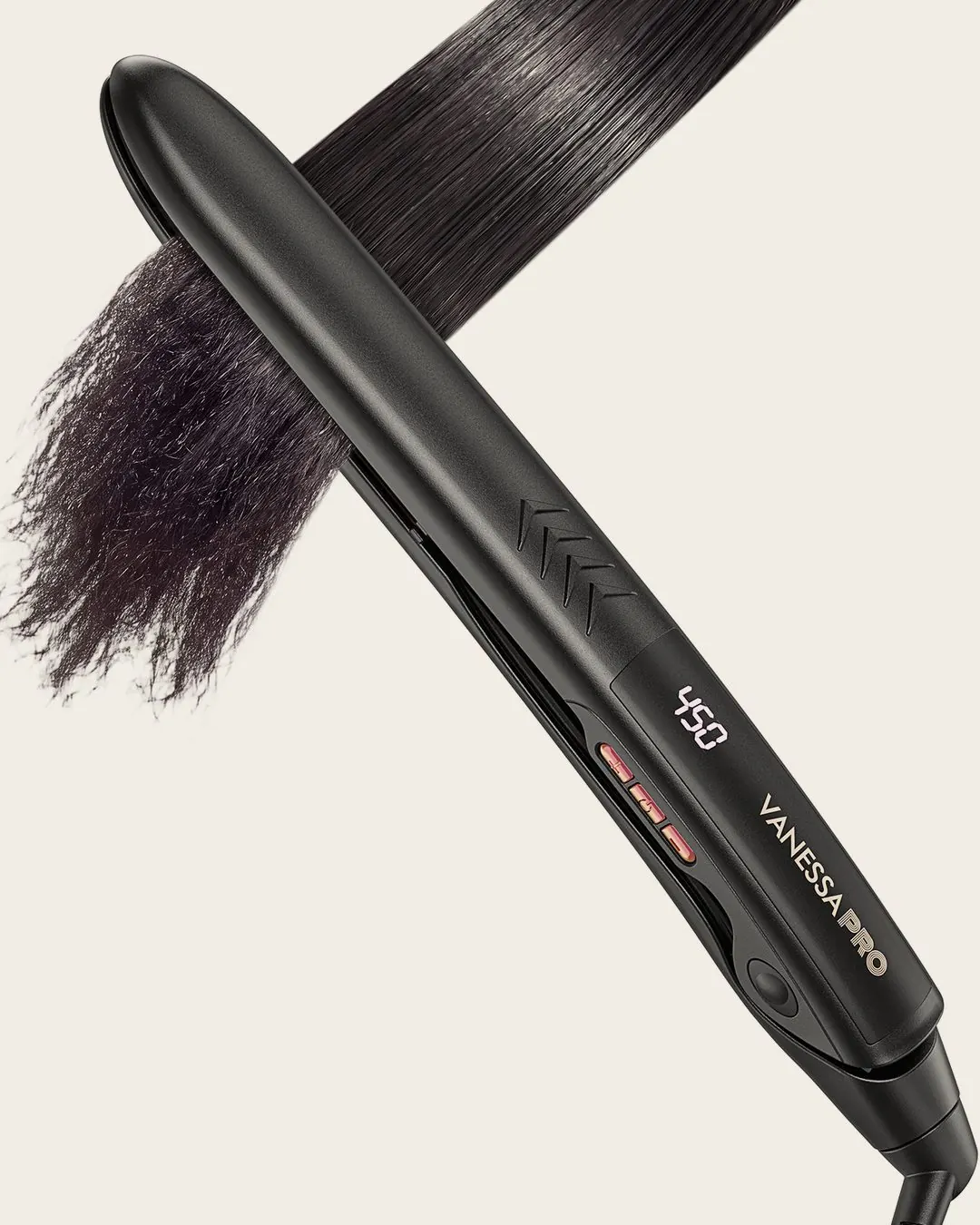
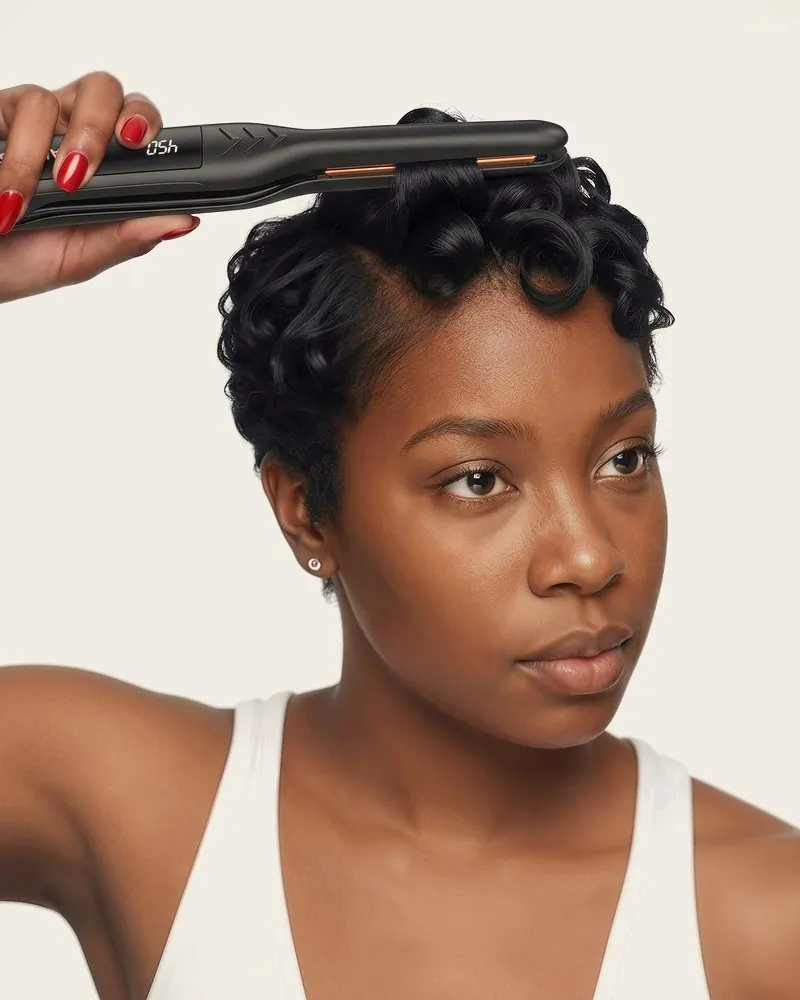
Tap your hair
Why color fades under the iron: color sits inside the hair, under the cuticle. Too much heat, or heat over and over on the same lengths, fades it and can turn it warmer or brassy.
How to protect the shade: many colorists suggest waiting a couple of days after a fresh color before heat styling. Dry completely, start in the lower range of the temperature chart with the − button, and make one slow pass instead of three fast ones.
Why bleached ends scorch easily: bleach opens the cuticle and leaves the hair more porous, so it loses moisture faster and takes heat faster. A setting that is fine on your virgin roots can be too much for bleached ends.
How to style safely: set the iron for your most fragile ends, not your strongest roots. Heat protectant every time, thin 1.5" × 0.5" sections, and leave the ends alone between wash days rather than touching them up again and again.
Why fine hair goes limp or snaps: a fine strand has less hair between the two plates, so it heats through faster than a coarse one. Too much heat, or heavy oils, flatten the roots and leave dry winter ends brittle.
How to keep body: a light mist protectant, the lowest setting that leaves a section smooth in one pass, and, for short fine cuts or bangs, a narrow plate — the 0.3" Mini or the 1" Classic — lifting each piece up and away from the scalp so the root doesn't lie flat.
Why steam straighteners backfire
A steam straightener releases water vapor onto the hair as the plates close. Warm moisture makes coarse hair feel softer in the moment — but it works against the very thing that keeps hair straight. Heat and tension straighten hair by re-setting its hydrogen bonds, and those bonds set as the hair cools and dries. Water breaks hydrogen bonds. Adding it while you press means the hair sets with water still in it, and as that water leaves, the hair loosens and frizzes.
Repeated wetting and drying also makes hair swell and shrink again and again, which wears on porous, dyed or bleached hair. That is why the instruction manual for Vanessa Pro irons says dry hair only — the same reason a sizzle when the plates close means stop.
The truth about "zero heat damage"
Any tool that reshapes dry hair with heat has to get it hot enough to move those hydrogen bonds. Above that, hair protein is damaged by too much heat, too long, or the same lengths pressed again and again — whatever the plate is made of and whatever the box says. No heat tool can promise zero damage.
What actually limits damage is in your hands: start at the setting your hair needs with the + and − buttons, press only completely dry hair, keep sections thin and stop at one slow pass. Titanium plates heat evenly, but the setting and the number of passes matter more than the plate.
Mixed hair: virgin roots, colored or bleached ends
Fine hair heats through faster because there is less of it; bleached hair because its cuticle is open. If your roots are virgin and your ends are colored, bleached or sun-worn, set the iron for the ends. If the roots need more, press the root third slowly and glide past the ends faster with lighter pressure, rather than raising the heat for the whole strand.
Resetting hair after winter
Cold air outside and heating inside dry the hair surface, and dry hair turns brittle and static. Before spring, trim the split ends — no iron, serum or protectant joins a split hair back together. Condition on wash day, and stop re-pressing the full length every day; touch up roots only, where the hair actually needs it.
Quick checklist for low-damage styling
- Completely dry hair — never steam or damp hair (why moisture undoes a press).
- Start in the lower range for fine, colored or bleached hair in the temperature chart; raise one step only if a section isn't smooth after one slow pass.
- Heat protectant every time; set the iron for your most fragile ends (heat protectant and aftercare).
- Thin 1.5" × 0.5" sections, one slow pass.
- Short fine cuts, bangs and edges: a narrow plate close to the root (short hair, edges and beards).
The 1" Titanium Classic has titanium plates, an LCD temperature display with +/− buttons, a 360° swivel cord and an ergonomic grip; for short fine cuts and bangs, the 0.3" Titanium Mini.
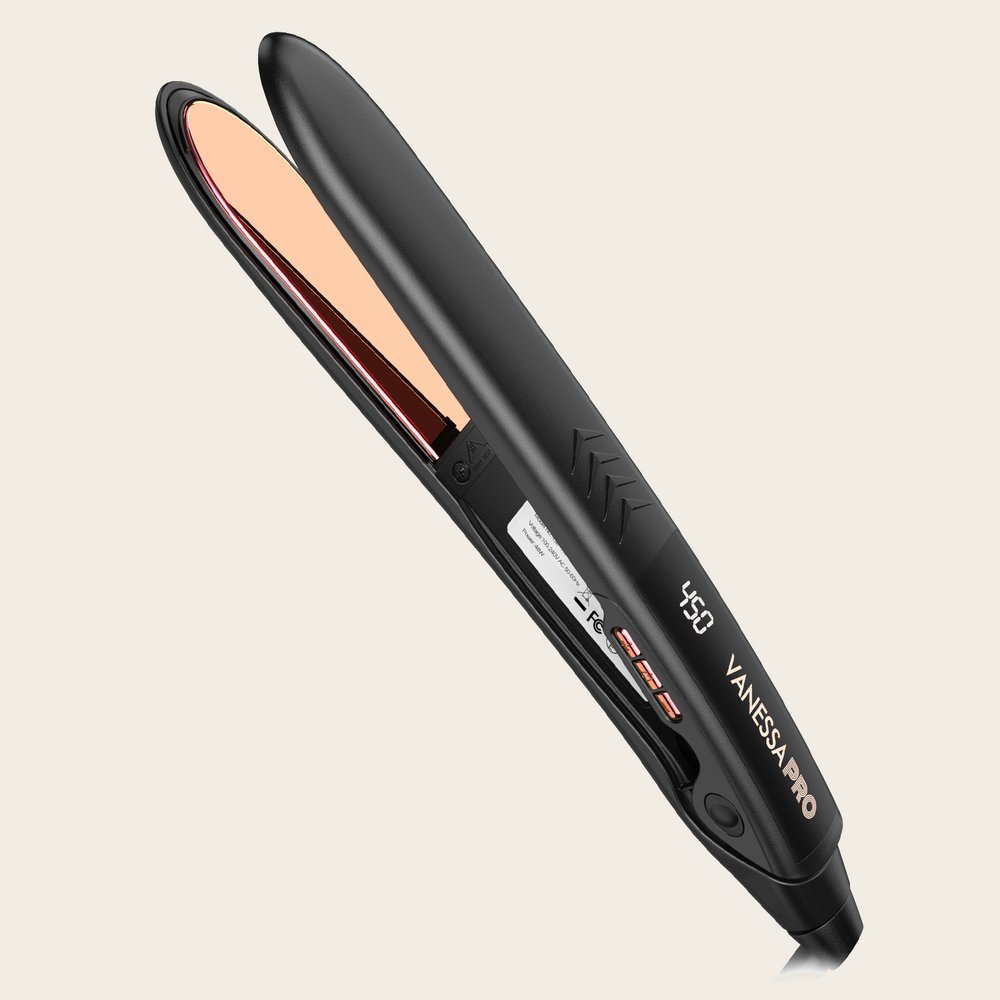
1" Titanium Classic
Not sure which width? Take the 30-second quiz →